
A dining table as an investment, made from a 47,000-year-old swamp root
For this extraordinary designer dining table, with unique ID No. 139, I used a large “ Kauri ” root measuring 3.30 × 1.20 meters and with a thickness of [...]. The wood comes from a 47,000-year-old swamp root and exhibits precisely the characteristics that make “ Kauri ” so special: natural root structures, original amber, and a monumental tabletop carved from a single piece that resembles a work of art.

The tabletop preserves the original " Kauri" amber, bark, and root strands. I deliberately left these unique natural features visible and treated them with epoxy resin to protect the natural openings and ensure the wood’s structure remains clearly visible. This combination of burl wood, golden amber, and epoxy resin makes the table a truly one-of-a-kind piece. Tables featuring these precious treasures from the past go far beyond the ordinary and are virtually impossible to create with other materials.
More about tables with amber inlaid into them

At the customer’s request, I filled in the root end with transparent epoxy resin. This preserves the shape of the “ Kauri ” root while ensuring the dining table remains practical for everyday use. The designer table thus combines the natural look of the wood with a clean, functional surface. Several visible layers of amber, bark, and resin give the surface a three-dimensional depth.
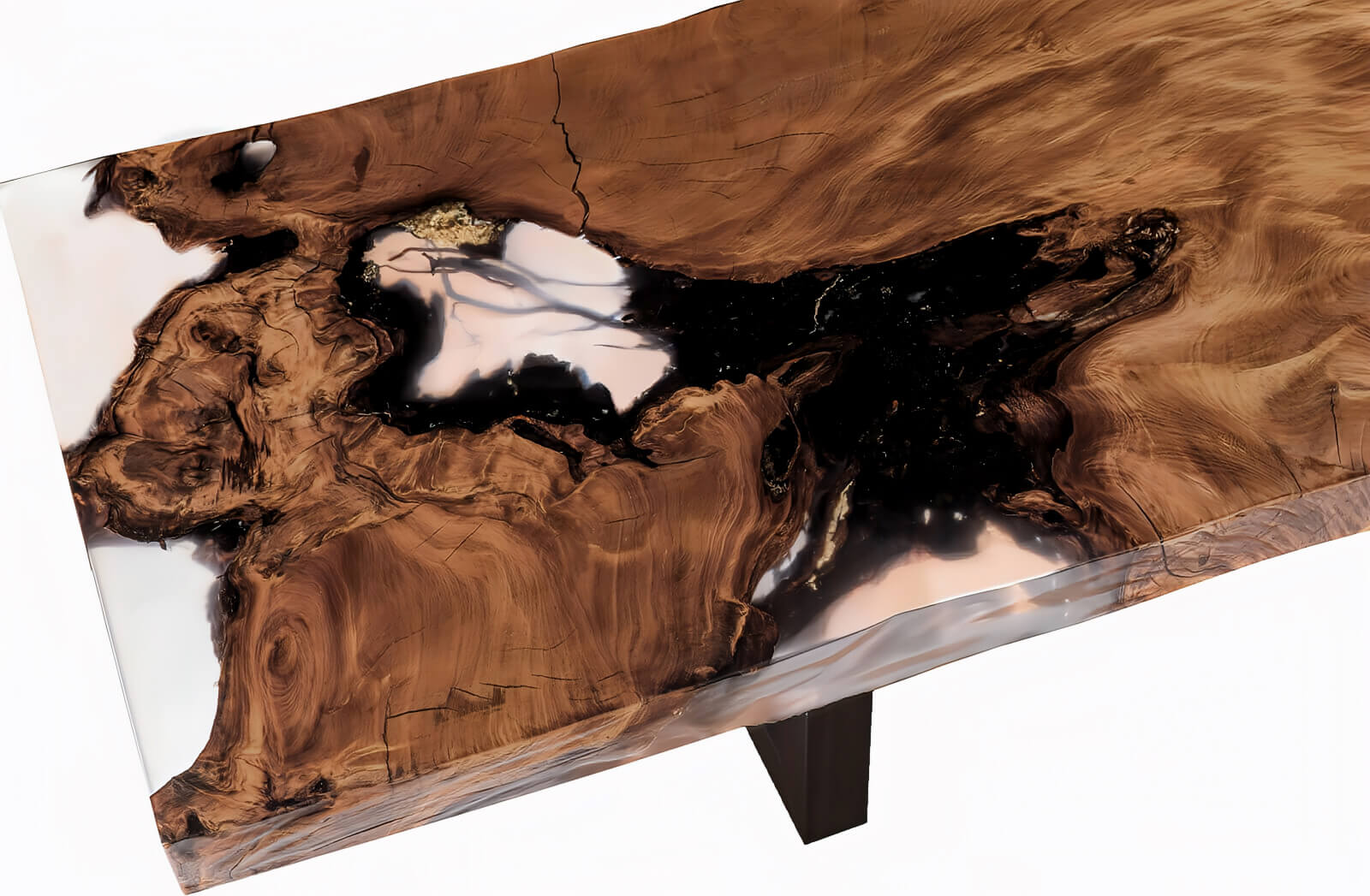
I assign each “ Kauri ” table its own unique serial number. Thanks to its age, size, origin, and visible amber, this designer dining table is a durable, one-of-a-kind piece that retains its value over time.
More on " Kauri" Tables as an Investment

I custom-built this table for a client in Switzerland exclusively for his living-dining area. In this extraordinary size, the beauty of the “ Kauri ” burl wood really comes into its own: large, powerful, and with a unique presence that immediately stands out in the room.

The tabletop, with unique ID No. 139, before processing—as an unprocessed blank shortly before being dried to 8% moisture content. This step is very important to ensure high quality and minimize the risk that the large, solid tabletop will develop cracks or warp later on at the customer’s home. Only then do I begin the handcrafted processing.
More about how I finished the tabletops

{{version_4="/elemente"}}
{{version_6="/elemente"}}
All dining tables at a glance

Table number
176
Kauri-Dining table made from natural burl wood
A dining table crafted from a 200 × 100 cm, 41,000-year-old Kauri root with natural, unplaned edges that strikingly highlight the beauty of the burl wood. A solid wood table that is a work of art created by nature.

Table number
139
Kauri-Dining table with amber and burl wood
This table was crafted from a 3.30 × 1.20 m piece of " Kauri" burl featuring natural amber and distinctive burl veins with openings filled with epoxy resin.

Table number
65
Designer dining table with glass legs
A 50,000-year-old " Kauri" tabletop with soft-to-the-touch natural edges, a serene appearance, and lightweight glass legs that make the tabletop appear to float.

Table number
77
Dining table made from a solid Kauri tree trunk
An extraordinary dining table with a rustic tree trunk slab, natural growth and pronounced tree edges, which testifies to the uniqueness of nature.

Table number
80
Backlit dining table with archaic tabletop
A solid " Kauri" tabletop with natural, organic edges and backlit epoxy resin that lends the room a warm atmosphere.

Table number
96
Kauri-Wood River Table with a River Pattern
In this table, a long, natural opening in the center was transformed into a riverbed using transparent epoxy resin. The result is a serene dining table with a unique material effect.

Table number
113
Large dining table incorporating root and trunk material
A large-format " Kauri" dining table featuring inlaid gold-colored amber and a tabletop carved from a single piece of burl and tree trunk wood
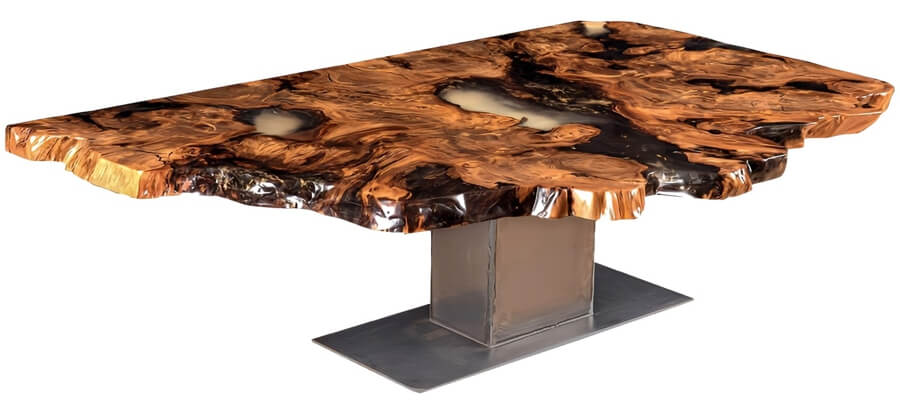
Table number
115
Dining and living room table made from ornate root
An exclusive " Kauri" table for the living and dining areas, featuring distinctive natural tree edges and a smooth, velvety-soft surface

